How To Make Pork Katsu Curry
This is a simple, classic katsu curry recipe – anyone can make it! I’ve used pork in this recipe, but it also works great with chicken, aubergine, or pumpkin.
1 hour cook
Serves 4
Ingredients
- 1onion, diced
- 2carrots, diced
- 1/2apple, peeled and diced
- 1 tbspcurry powder
- 1 tspgaram masala
- 1 tbspflour
- 30gunsalted butter
- 300mlchicken stock
- 1 tspbrown sugar
- Salt and pepper, to taste
- 4boneless pork cutlets
- 50gplain flour
- 2eggs, beaten
- 150gpanko breadcrumbs
- Flaky salt, to finish
- White rice
- Lemon wedges
- White cabbage, shredded
Katsu sauce:
Pork:
To serve:
Just what is katsu curry and where does katsu curry come from? Let's take a deep dive. Curry became popular in Japan when English merchants brought curry powder over to Kobe. Differing from Indian curry, Japanese curry tends to contain fruit and is slightly thicker. Here's how to make katsu curry sauce, what to serve with katsu curry and allll the deets you need to nail one at home.
Method
Start by sautéing the onion, apple, and carrot together in the butter over medium heat.
Once slightly softened and fragrant, add the curry powder, garam masala, and flour, and cook that for one or two minutes.
Carefully pour in the chicken stock, add brown sugar, salt, and pepper. You can swap out the salt for soy sauce if you prefer. Reduce the heat to low, and leave to simmer for 15 minutes or until the carrot is soft.
Once everything is soft, blend the sauce with an immersion blender. If you prefer your sauce chunky leave it as it is, if not then blend until silky smooth.
Trim any excess fat or cartilage from the pork, then place between two pieces of cling film. Bash it out as thin as you like, as long as it stays in one piece. I like to leave mine around 1cm thick.
Pat dry the flattened pork, then season both sides with salt and pepper. Add vegetable oil to a large heavy bottomed pan, you want the oil to come around 2 inches up the side. Heat until it reaches 180 C
While the pork is heating up, prepare your breading station. Place the flour, egg, and panko in separate bowls. Coat your dried pork cutlets in flour, before dunking in the beaten egg, then finally the panko.
Once everything is coated and the oil is up to temperature, carefully place the breaded pork in the oil - make sure not to overcrowd the pan. Once one side is deep golden brown, flip and cook the other side until it's equally golden. Drain on a paper towel lined plate, and sprinkle with flaky salt.
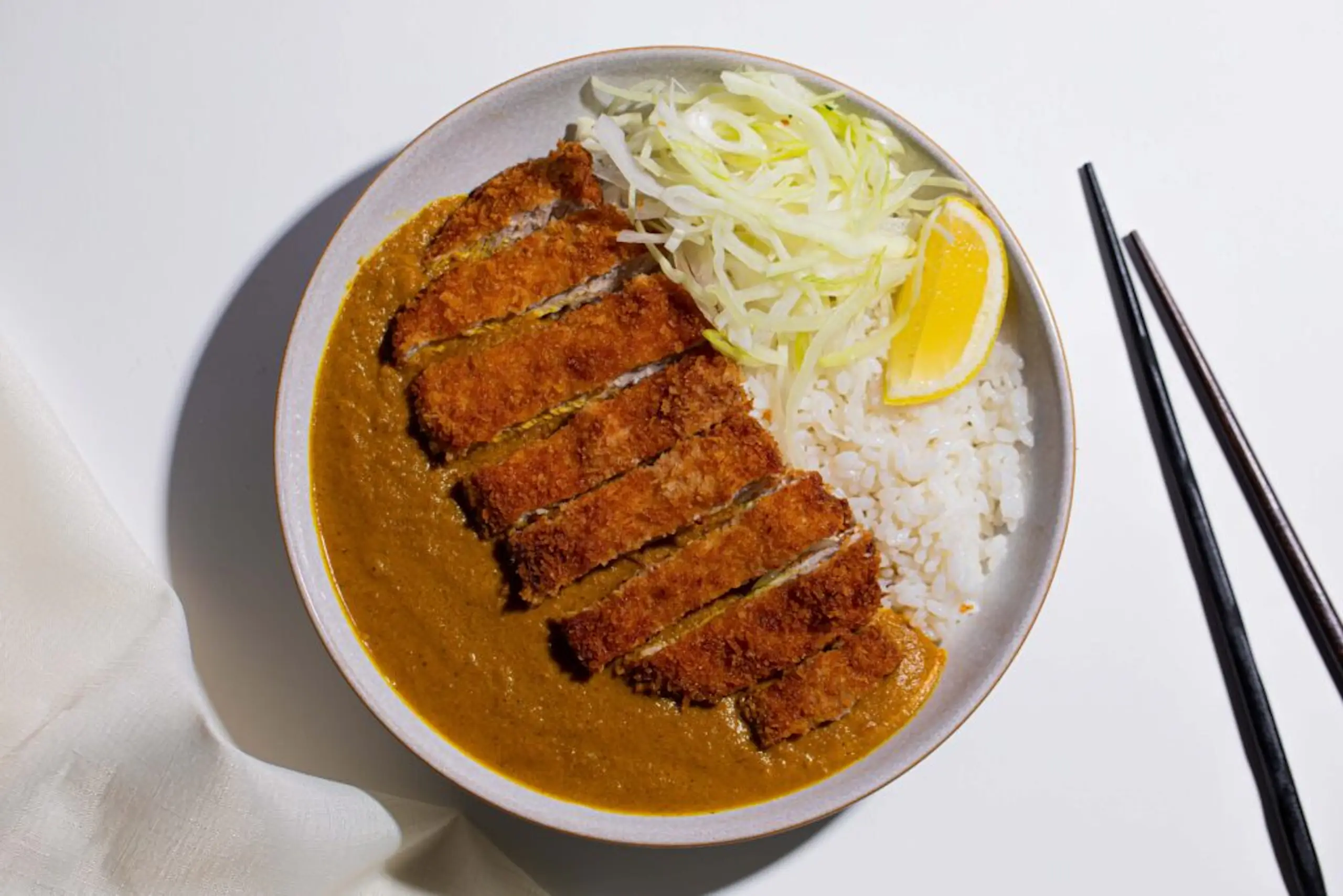
Slice up the crispy pork, then plate up with your rice, katsu sauce, cabbage, and lemon. Enjoy!

More recipes from Spencer Lengsfield...

saved! saved!